

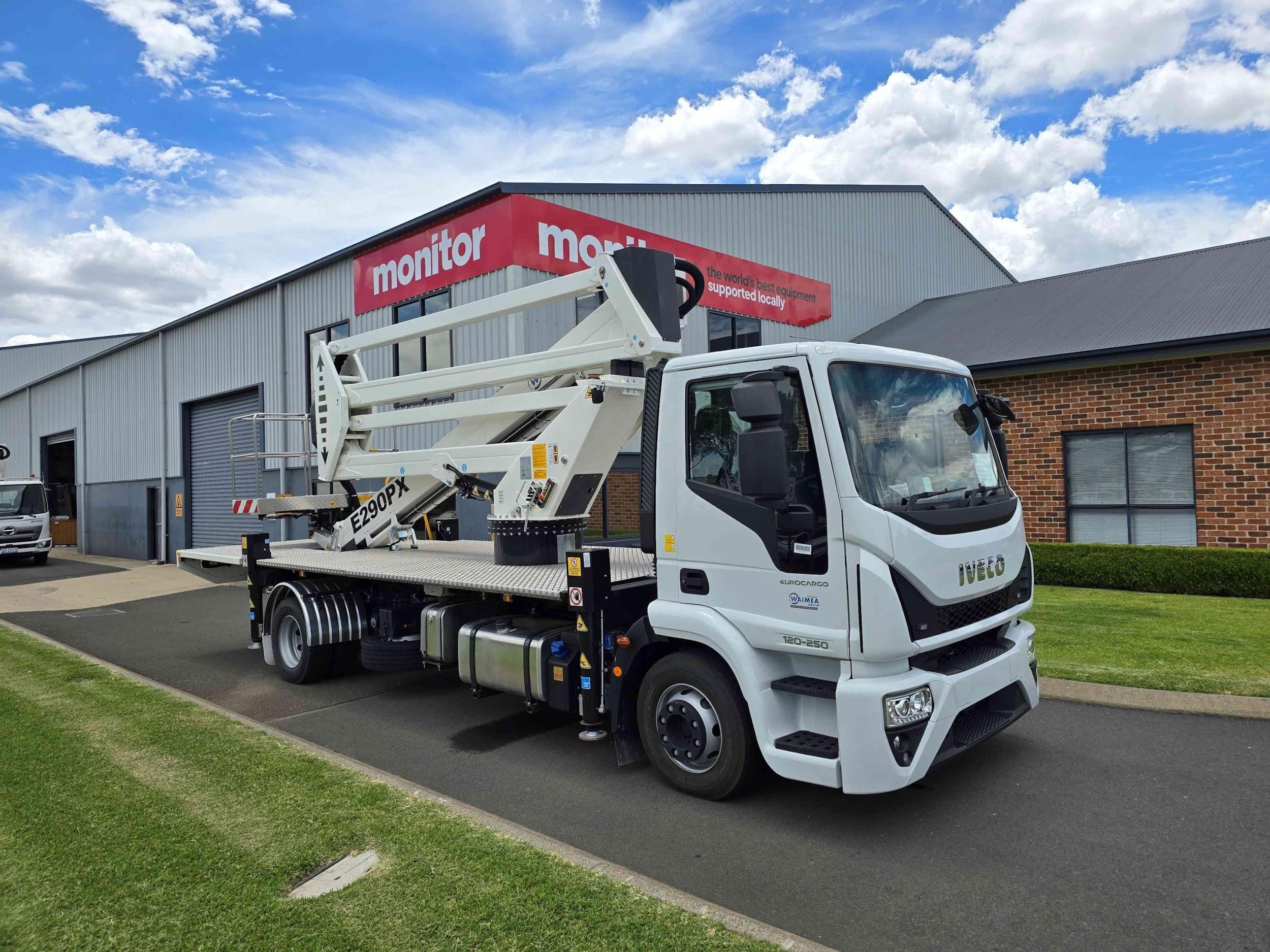
Short answer: For short, high or hard-to-reach jobs, a spider lift is often faster and cheaper than scaffolding. A tracked spider lift drives in, sets up on its outriggers and has your crew working at height without days of erecting and dismantling scaffold.
If you paint, roof, sign, clean or fit out buildings, you know the routine. The job itself takes a day or two, but the scaffold around it takes longer to book, build and pull down. This spider lift vs scaffolding guide sets out where scaffolding is costing you time and money, and how a spider lift fixes it.
Last updated: November 2026 · By the Monitor team
Spider Lift vs Scaffolding: What is The Difference?
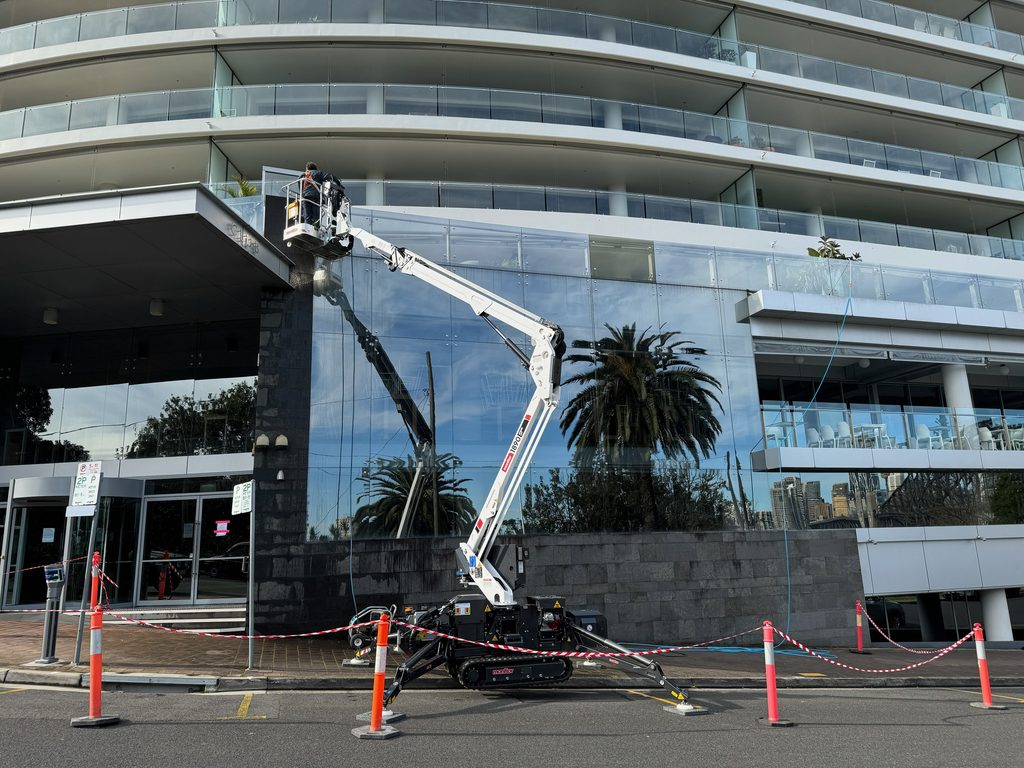
A spider lift is a mobile elevating work platform (EWP) that is driven to the work area, while scaffolding is a temporary structure built around it. A tracked spider lift is a compact EWP on rubber tracks that sets up on four outriggers and lifts a basket to working height, reaching up and over obstacles with its boom.
Scaffolding has to be delivered, erected and later dismantled before the site is clear. A spider lift arrives on a trailer, sets up and can move to the next work area in the same day. That one difference drives most of the time and cost gap between them.
Why Does Scaffolding Cost More Than the Job Itself?
On short jobs, scaffolding often costs more in time and money than the work it gives access to. You are paying for everything that happens before and after the real work.
- Waiting to start: you book the scaffold company, then wait for a crew to fit you in before any work can begin.
- Erect and dismantle: a licensed scaffolding crew has to build it and come back to take it down, and you pay for both visits
- Hire by the week: scaffold hire runs for as long as it’s standing, including the days lost to rain or other trades running late.
- Fixed in one place: once it’s up, it only covers that elevation. Need to reach the other side of the building? That’s another build.
How Much Is Scaffolding Really Costing Your Business?
The real cost of scaffolding is the work you can’t do while you wait for it. Every day spent waiting on an erect crew is a day your own crew isn’t earning.
Think about the last job where the scaffold went up on Monday, your two-day paint job started Wednesday because of a hold-up, and the scaffold didn’t come down until the following week. You paid for the hire, the build and the strip-out, and you probably lost a day of billable work in between. Multiply that across a year of gutters, fascias, signs, lights and window cleans, and the cost adds up fast.
Then there’s the site itself. Scaffolding can block footpaths, driveways and shop entrances, which means more disruption for the client and more conversations about access. On a residential job, it can sit in a garden bed or across a driveway for days. And if the access plan changes halfway through, so does the scaffold quote.
How Does a Spider Lift Solve the Scaffolding Problem?
A spider lift replaces the erect, wait and dismantle cycle with drive in, set up and work. Your crew controls the timing, so the job starts when you’re ready, not when the scaffolders are.
- Set up and start: drive the lift to the work area, deploy the outriggers and go to working height, with no structure to build first.
- Reach over obstacles: the boom reaches over fences, roofs, garden beds and awnings, so the base can sit where there’s room.
- Move as you work: finish one elevation, stow the lift and track it to the next without rebuilding anything.
- Clear the site at knock-off: the lift leaves with your crew, so driveways, footpaths and entrances aren’t blocked for days.
- Tight and sensitive sites: tracked spider lifts fit through narrow access points and come with 240V, battery or lithium power options for quieter work.
For trades who work at height every week, owning or hiring a spider lift also changes how you quote. You can price access into the job yourself instead of waiting on a scaffold quote. Read more about how a spider lift saves you on labour costs.
Which Spider Lift Suits Jobs That Use To Need Scaffolding?
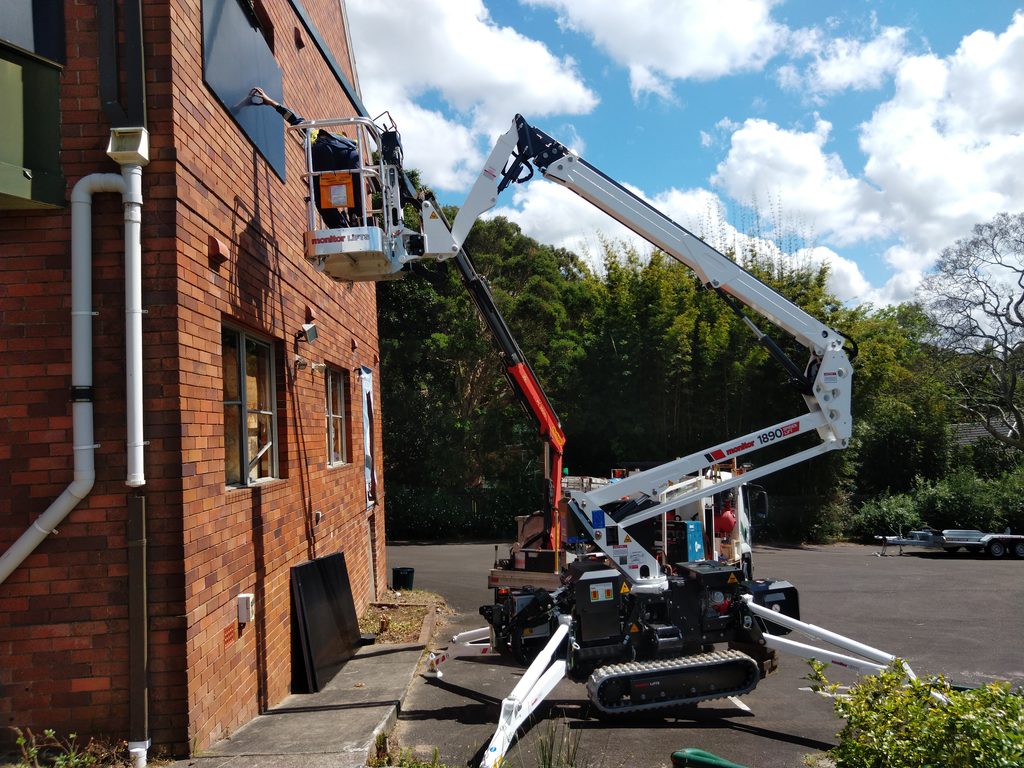
The right spider lift depends on the working height and outreach your typical jobs need. These Monitor spider lifts cover most single and double-storey work through to larger commercial buildings:
| Model | Working height | Outreach | Platform capacity | Typical work |
| Monitor 1275 | 12.30 m | 7.50 m | 230 kg | Single and double-storey homes, gutters, fascias, signage |
| Monitor 1575 | 15.00 m | 8.50 m | 200 kg | Two-storey homes, painting, roof edges, lighting |
| Monitor 1890 | 17.60 m | 8.70 m | 200 kg | Taller homes, townhouses, small commercial buildings |
| Monitor 2210 EVO | 21.70 m | 10.30 m | 230 kg | Commercial facades, atriums, larger signage |
| Monitor 2714 | 27.00 m | 15.10 m | 230 kg | Multi-storey buildings, high reach over obstacles |
Specs from the Monitor Core Fleet Specifications brochure.
Not sure how much height you need? Our comparison of 22 m vs 27 m spider lift reach shows how working height and outreach play out on real sites. You can also browse the full tracked spider lift range.
Should You Hire or Buy a Spider Lift?
Hire a spider lift for occasional jobs, and buy one once it would be working most weeks. Monitor offers new and used spider lifts, spider lift hire from branches in Tamworth, Sydney, Melbourne, Brisbane and Perth, and Hire-To-Own so you can try a machine before committing. Every Monitor spider lift is backed by 24/7 technical support, genuine parts on demand, training at handover and, in metro areas, the Minimised Downtime Guarantee.
Ready to Swap Scaffolding For a Spider Lift?
If scaffolding is slowing your jobs down, talk to your local Monitor rep about the right spider lift for the work you do. Browse the spider lift range, see how spider lifts suit construction and building trades, or read about the Platform Basket-built Monitor models


